Josh Daniel
Tucked away within Harvard University is one of the world’s most important collections of fungi, lichens, algae, mosses, and other cryptic organisms. The Farlow Herbarium may not be as famous as Harvard’s museums or libraries, but for scientists who study fungi and plant evolution, it is considered to be of great scientific importance. In November, the herbarium celebrated its 100th anniversary with a symposium featuring leading researchers in cryptogamic botany. This is the study of spore-producing plants and fungi, and as it turns out, this is a clade of organisms well represented by the Farlow Herbarium.

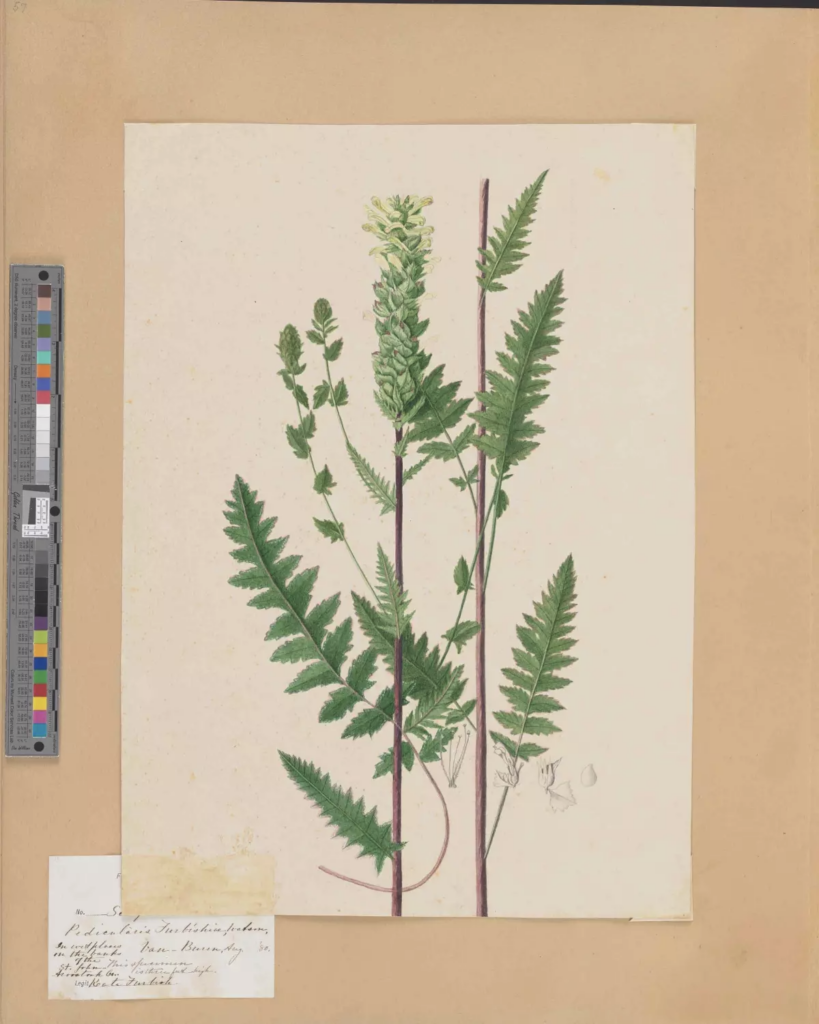
The Farlow Herbarium at Harvard
More on Cryptogamic Botany
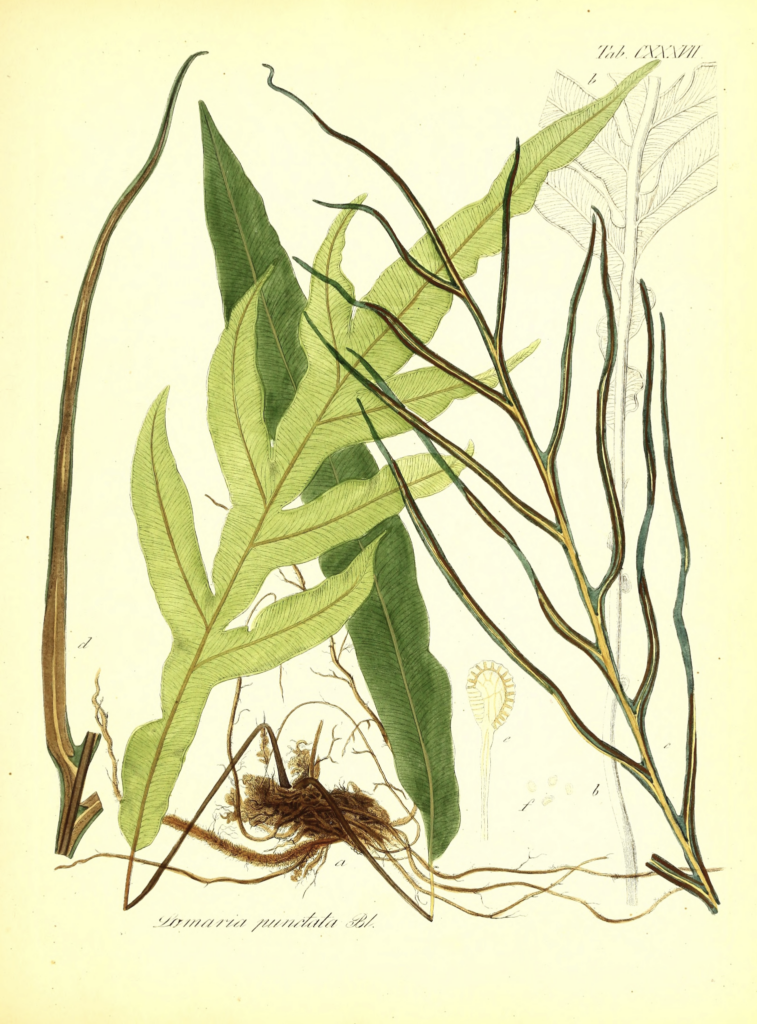
The spore-producing organisms catalogued and studied at Farlow include fungi, lichens, algae, mosses, liverworts, and slime molds. These organisms reproduce in ways that were once mysterious to scientists, giving rise to the term “cryptogam,” meaning “hidden reproduction.”
Although these organisms are easy to overlook, they play major ecological roles. According to Harvard professor Jeannine Cavender-Bares, cryptogams were among the first organisms that made the transition from water onto land millions of years ago. Without them, terrestrial ecosystems as we know them might never have developed. Despite this, scientists still know surprisingly little about these organisms. More than 2.5 million fungal species are believed to exist, yet over 90 percent remain undescribed. Furthermore, only a tiny fraction of known fungi have been evaluated for conservation status.
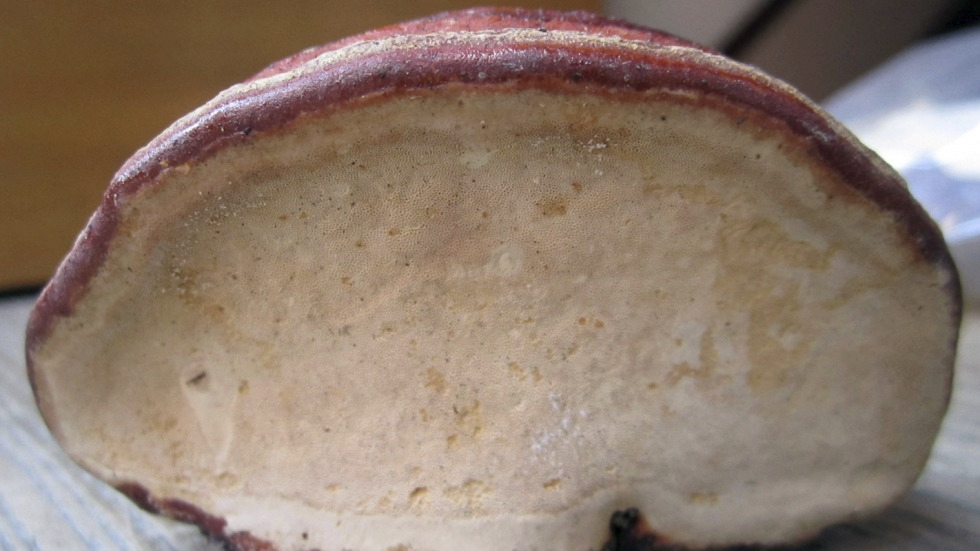
Fungal Specimen at Farlow Herbarium
Global Impact of the Collection
The Farlow Herbarium contains around 1.4 million specimens, which makes it one of the world’s largest research centers for cryptogamic botany. It originated with William Farlow, a Harvard botanist who donated his personal library and collections after his death in 1919. Farlow himself was passionate about the practical applications of botany research. He studied the fungal disease known as chestnut blight, which infamously devastated the American chestnut tree in the early 20th century. During World War II, the collection also expanded through research on another practical problem, the decay of materials such as canvas and leather in tropical climates. Today, the collection contains specimens from around the globe, including a fungus extracted from a plastic canteen in New Guinea.
The Noble Fight to Save Coffee
One personally pertinent presentation at the symposium focused on coffee leaf rust, a fungal disease threatening coffee crops worldwide. Mycology professor, M. Catherine Aime, explained that coffee is the world’s second-most traded good, right behind oil, making the disease not only a major ecological concern but an economic one. Coffee leaf rust can reduce the yield of coffee crops by up to 50%, yet scientists still do not fully understand how the fungus reproduces. Researchers suspect that coffee leaf rust requires a different host plant for sexual reproduction, but which species that may be remains a mystery. Herbaria specimens have become invaluable for studying the disease. Through specimen analysis, researchers discovered tiny “hyperparasites,” which attack the rust fungus parasite itself. One such specimen had been in storage at the herbarium since 1912, showing that cutting-edge science does not always necessitate the newest materials.
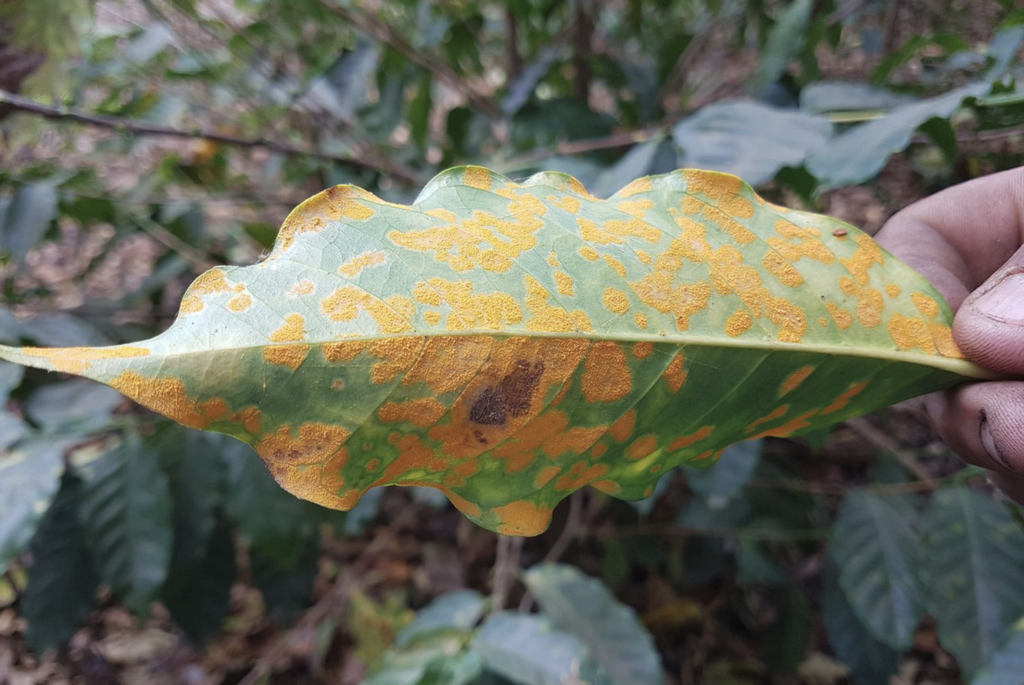
Coffee Leaf Rust
How Herbaria Help to Study Climate Change
The symposium also highlighted the utility and importance of herbaria for understanding climate change. Lichen specialist Rebecca Yahr described lichens as the ecological equivalent of “canaries in coal mines” because of their extreme sensitivity to pollution and temperature shifts.
By studying lichens preserved in historic wood from rural English buildings, scientists were able to paint a picture of biodiversity change spanning the past six centuries. Their findings revealed the drastic effects of industrial pollution and climate change on the composition of flora across England. Species once common near London and pervasive throughout the island are now restricted to only northern coastal regions and Scotland.
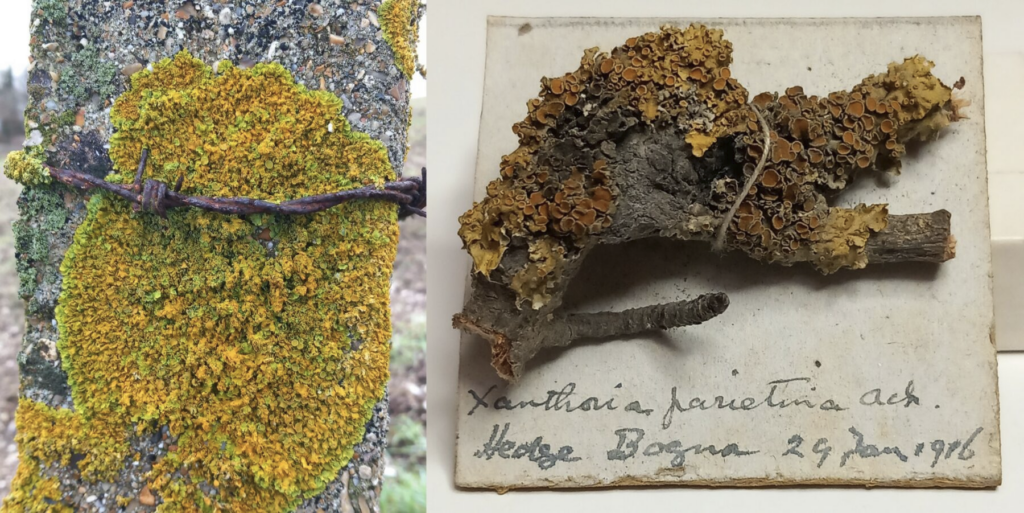
Examples of Live Lichen Growing on Stone (left) and Preserved Lichen Growing on Bark (right) from the Portsmouth Natural History Museum
More Than a Storage Room
During the symposium, a common theme surfaced again and again: herbaria are not dusty old archives, but active places of scientific research that only gain value over time.
As we’ve discussed, scientists rely on world-class herbariums such as Farlow to fight the spread of plant diseases, understand climate change and its effects on plant biodiversity, solve everyday problems through botany, and much more.
As botanist Brent Mishler explained during the event, “These are not libraries. They are not storage. They are laboratories.”