Genevieve Hammatt
Born in the 1830s, Catherine (Kate) Furbish was the eldest daughter to her five younger brothers growing up in Maine. She spent much of her time amongst the woods, observing and investigating with the guidance of her father. Kate showed great promise through identifying local flora as a child, but pursued a genteel education in French literature and painting, while also studying drawing in Portland and Boston. While in Boston, Furbish attended botany-focused lectures, which sparked her interest in George L. Goodale, and thus, the field of botany. She returned to Maine with an even stronger passion for the local plants where she dedicated her life to documenting as many species as she could. Although she led a typical life for her time in that she dressed appropriately, attended church, and kept her house tidy, she was an independent spirit who roamed where she pleased and never married.
The majority of her life’s work was completed between 1870 and 1908, which consisted of collecting, classifying, and drawing the flora of Maine. With these collections of drawings and descriptions, Furbish put together the well known “Flora of Maine” book that contained hyper-detailed botanical watercolor illustrations of 1,326 species spanning 14 volumes. In all of these collected specimens, she ended up discovering two new species which were named after her. In response to this, she was quoted as saying, “were it not for the fact that I can find no plants named for a female botanist in your manual, I should object to ‘Pedicularis furbishae’ for it is too often conferred to be any particular honor… But as a new species is rarely found in New England and few plants are named for women, it pleases me,” (NYBG).
Pedicularis furbishae has only been found along the Saint John River in Maine and Canada where there are a few thousand individuals and around two dozen populations. Discussion on constructing the Dickey-Lincoln dam started in the late 1960s which sparked debate upon the rediscovery of Furbish’s lousewort in 1976 that was thought to be extinct. The hydroelectric project would have flooded 80 thousand acres of Maine, including the only habitat home to Furbish’s lousewort. Kate Furbish not only acted as a trailblazer for future female botanists and painted hundreds of flora, but her dedication to observing what was growing around her effectively saved a critically endangered species. Posey woman, as some called her, dedicated her life to the flora of Maine and it paid off through inspiring female botanists, artists, conservationists, and leading to the critical discussion of building the dam.
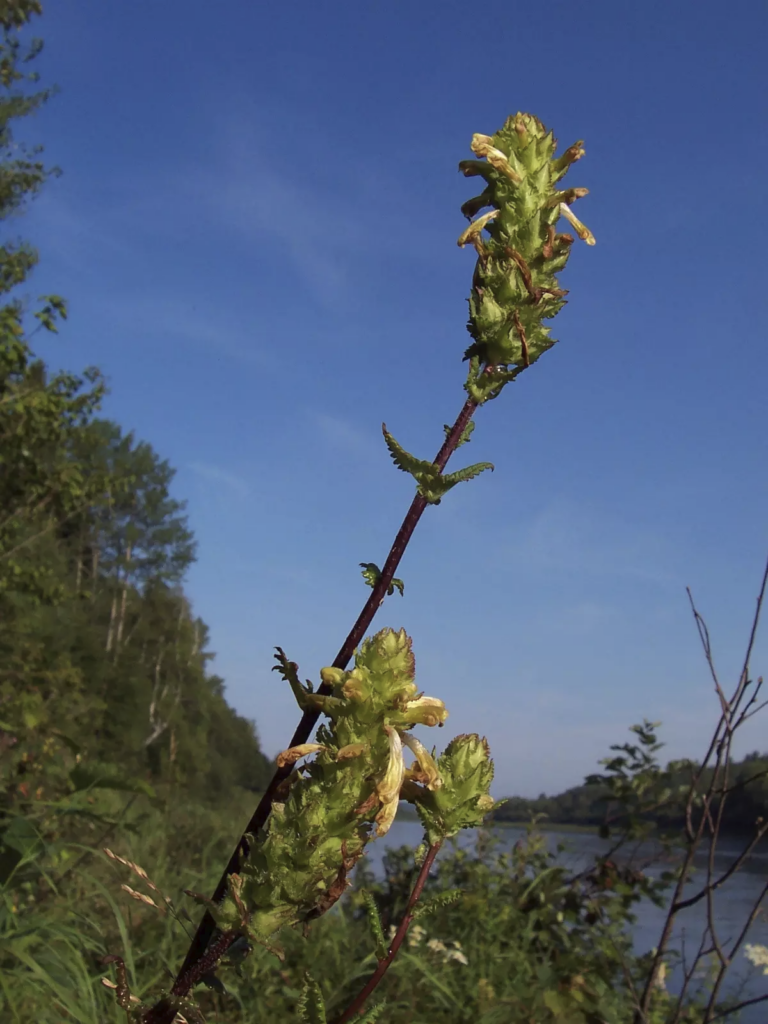
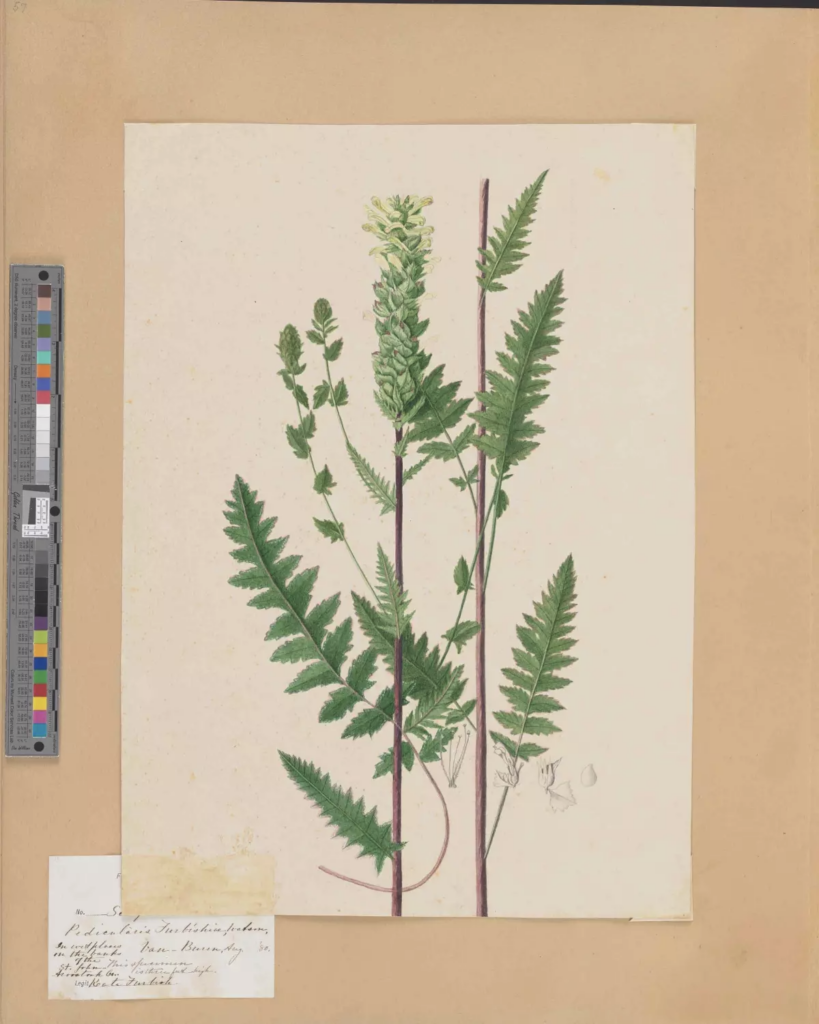
USFWS – Pedicularis furbishae growing naturally along St. John River & Kate Furbish’s watercolor painting of the species.
Leave a Reply