Nora Beer
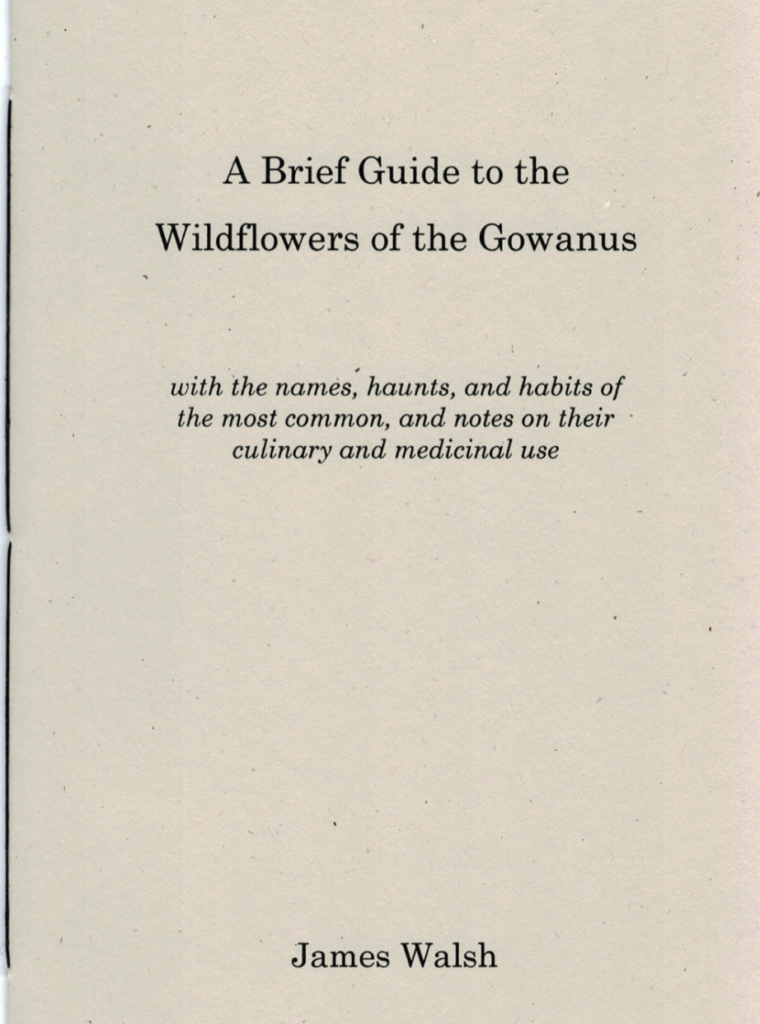
James Walsh visited our undergraduate course on Herbarium: Research, Art, and Botany, bringing perspective on Herbaria and its artistic intersections. His visit expanded my understanding of botany as a tool in art as much as it is in science. As a fellow Brooklynite, I was extremely drawn to Walsh’s site choice of one of his works “A brief Guide to The Wildflowers Of The Gowanus” as the canal’s unkept-ness was very troubling to me as a kid. I’d heard about three eyed fish in the canal, and waste dumpsage, which made a field guide to the site something quite foreign but intriguing. Insisting the importance of the plants in an area that has generated so much community disgust as this retail eyesore, forces readers of Walsh’s work to engage with the landscape completely differently, understanding that there is life, life that has purpose in culinary spaces, in medicine, and has a story worth sharing.
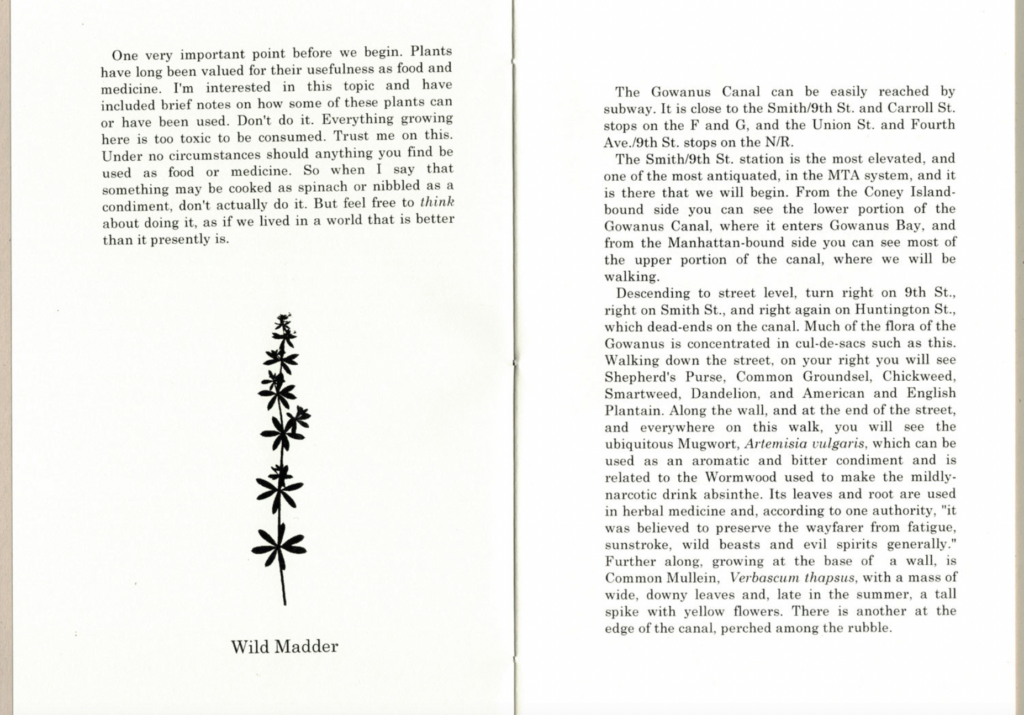
In Walsh’s practice he enjoys playing around with how plants and texts are situated on a page, and how the two can enhance one another’s meaning. His newest work, “The Arctic Plants of New York City” plants and texts interact on a page almost akin to prose and illustration. The plant on each page acts as part of the poetic construction of each specimen presented and explained. The plants themselves are platformed quite differently than plants perform on a traditional herbarium specimen. Many pages highlight the plant and its various names with the plant situated in the middle. With this orientation, there seemed to be a decolonial spirit in attempting to present the plant at the center of its history of varying names and usages over time.
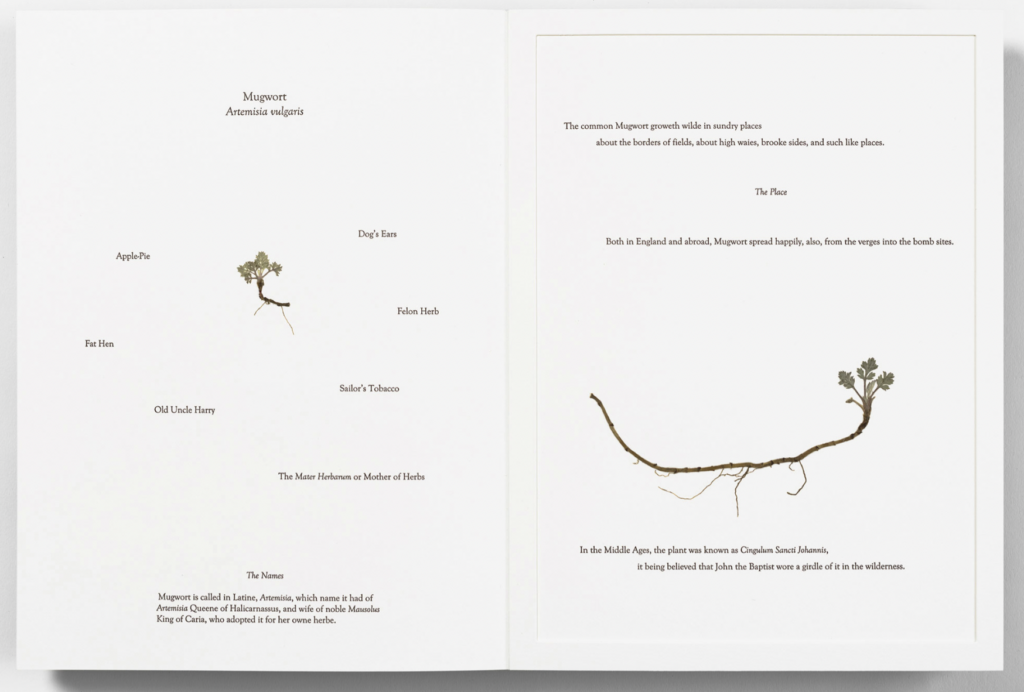
In Walsh’s work there is a commitment to history, intentionality, and craft. His art books act as a brilliant alternative archive to an herbaria, one that includes historical investigation, personal inquiry, and environmental connection. By pushing the boundaries of the herbaria specimen format, Jame Walsh achieves a new status as a dynamic botanist who seeks to redefine the herbarium as an archive, extending herbal collections to book, video, sculpture, and gallery formats.
Leave a Reply