Category: Uncategorized

  • The Strange World of Fern Evolution

    By Kai Bjork

    Ferns represent an ancient clade of vascular plants, first evolving out of the middle Devonian before radiating evolutionarily in the late Cretaceous. As such, there is a wealth of questions regarding their evolutionary history and much that can be learned about the process of evolution itself. 
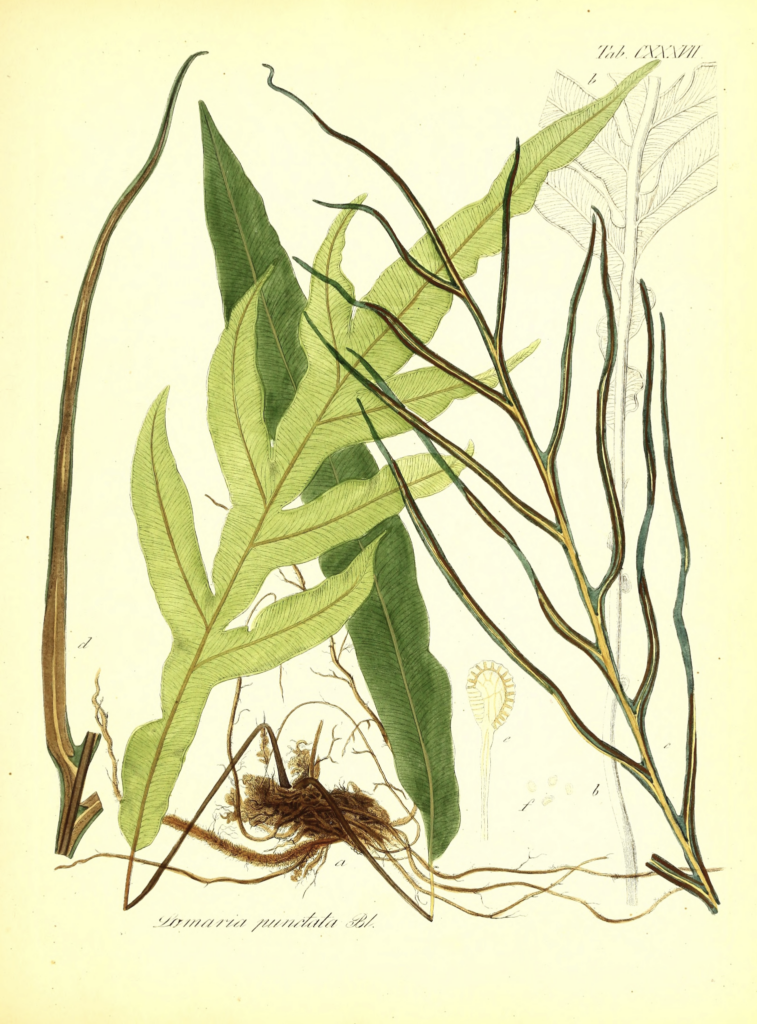
    In their 2025 study, “The evolution of reproductive leaf dimorphism in two globally distributed fern families is neither stepwise nor irreversible, unless further specialization evolves,” authors Jacob S. Suissa and Makaleh Smith seek to do just that. In the paper, the authors investigate the reproductive strategies of two closely related families of ferns, the Blechnaceae and Onocleaceae, to see if they follow what’s known as Dollo’s Law. This “law,” first proposed by Belgian paleontologist Louis Dollo, states that it is impossible or improbable for an organism to evolutionarily return to a previous evolutionary state. More accurate to contemporary usage—it describes how, as a derived trait gains sufficient layers of complexity, it becomes increasingly unlikely that the continued evolution of that trait would result in a reversal to an  

    identical past form. To investigate Dollo’s law in ferns, the authors used digitized herbarium specimens as a source of morphological data, where images of the ferns had specific traits masked out and isolated before being analyzed. The result of their analysis showed two distinct forms of reproductive strategy present in the ferns, monomorphic and dimorphic. The monomorphic strategy is characterized by leaves with non-specialized functions where sporangia—a reproductive structure enclosing the fern’s spores—is present on the underside of the same leaves that are used for photosynthesis. The dimorphic strategy, on the other hand, is characterized by leaves that either have entirely specialized leaves where the entire frond is used primarily for reproductive purposes or partially specialized leaves where the frond has an identifiably different structure than the main photosynthesizing leaves but is covered in less than 50% sporangia.

    After identifying these distinct forms, the authors were able to reconstruct a phylogeny of the ferns to see how they evolved over time, and importantly for understanding Dollo’s law, identify the direction of evolutionary transitions too and from traits. Amazingly, the authors found that for the reproductive strategies of monomorphism and dimorphism there were multiple instances of trait reversal where a species evolved a dimorphic strategy and then reverted to a monomorphic one. 

    However, there’s more to the story. The authors also looked at a trait in ferns where the pinnae move in response to the humidity of the environment. To quantify this trait in ferns the authors originally planned to use temperature- and humidity-sensitive chambers. Unfortunately, the authors were doing their research during the height of the Covid pandemic—and so they had to get creative. As a substitute for the climate-controlled chambers, the authors used a zip-lock bag, wet paper towels, an iPhone, and an oven. To simulate the conditions of 100% humidity, they placed the pinnae into the zip-lock bag with the wet paper towel and recorded images with the iPhone. And, to simulate 0% humidity, they put the pinnae into an oven at 100 °F! Luckily it has been found that for the species they were working with, temperature has little to no effect on fertile

    fronds. Crucially, though, this trait of humidity response is highly specialized, only appearing in dimorphic species and facilitating the effective dispersal of spores during the early spring. This specialization was reflected in the results from the prior phylogenetic analysis, with no species that presented humidity responsiveness showing reversals. The results showcase the nuances of Dollo’s Law—showing both an instance where it doesn’t hold true and how evolutionary traits become fixed through specialization and increasing networks of interdependencies.

    Sources

    Jacob S Suissa, Makaleh Smith, The evolution of reproductive leaf dimorphism in two globally distributed fern families is neither stepwise nor irreversible, unless further specialization evolves, Evolution, Volume 79, Issue 2, February 2025, Pages 164–175, https://doi.org/10.1093/evolut/qpae159 

    Kunze, Gustav, Die Farrnkräuter in kolorirten Abbildungen naturgetreu Erläutert und Beschrieben, Leipzig, E. Fleischer, 1840
  • Posey Woman and Pedicularis furbishiae

    Genevieve Hammatt

    Born in the 1830s, Catherine (Kate) Furbish was the eldest daughter to her five younger brothers growing up in Maine. She spent much of her time amongst the woods, observing and investigating with the guidance of her father. Kate showed great promise through identifying local flora as a child, but pursued a genteel education in French literature and painting, while also studying drawing in Portland and Boston. While in Boston, Furbish attended botany-focused lectures, which sparked her interest in George L. Goodale, and thus, the field of botany. She returned to Maine with an even stronger passion for the local plants where she dedicated her life to documenting as many species as she could. Although she led a typical life for her time in that she dressed appropriately, attended church, and kept her house tidy, she was an independent spirit who roamed where she pleased and never married. 

    The majority of her life’s work was completed between 1870 and 1908, which consisted of collecting, classifying, and drawing the flora of Maine. With these collections of drawings and descriptions, Furbish put together the well known “Flora of Maine” book that contained hyper-detailed botanical watercolor illustrations of 1,326 species spanning 14 volumes. In all of these collected specimens, she ended up discovering two new species which were named after her. In response to this, she was quoted as saying, “were it not for the fact that I can find no plants named for a female botanist in your manual, I should object to ‘Pedicularis furbishae’ for it is too often conferred to be any particular honor… But as a new species is rarely found in New England and few plants are named for women, it pleases me,” (NYBG). 

    Pedicularis furbishae has only been found along the Saint John River in Maine and Canada where there are a few thousand individuals and around two dozen populations. Discussion on constructing the Dickey-Lincoln dam started in the late 1960s which sparked debate upon the rediscovery of Furbish’s lousewort in 1976 that was thought to be extinct. The hydroelectric project would have flooded 80 thousand acres of Maine, including the only habitat home to Furbish’s lousewort. Kate Furbish not only acted as a trailblazer for future female botanists and painted hundreds of flora, but her dedication to observing what was growing around her effectively saved a critically endangered species. Posey woman, as some called her, dedicated her life to the flora of Maine and it paid off through inspiring female botanists, artists, conservationists, and leading to the critical discussion of building the dam.

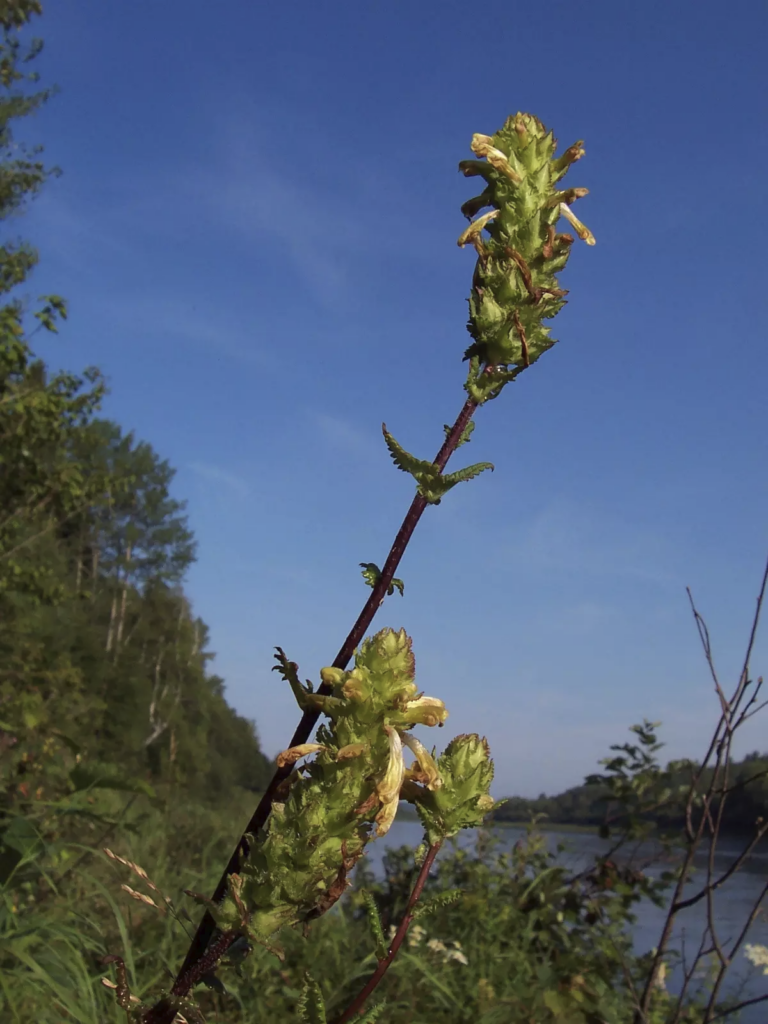
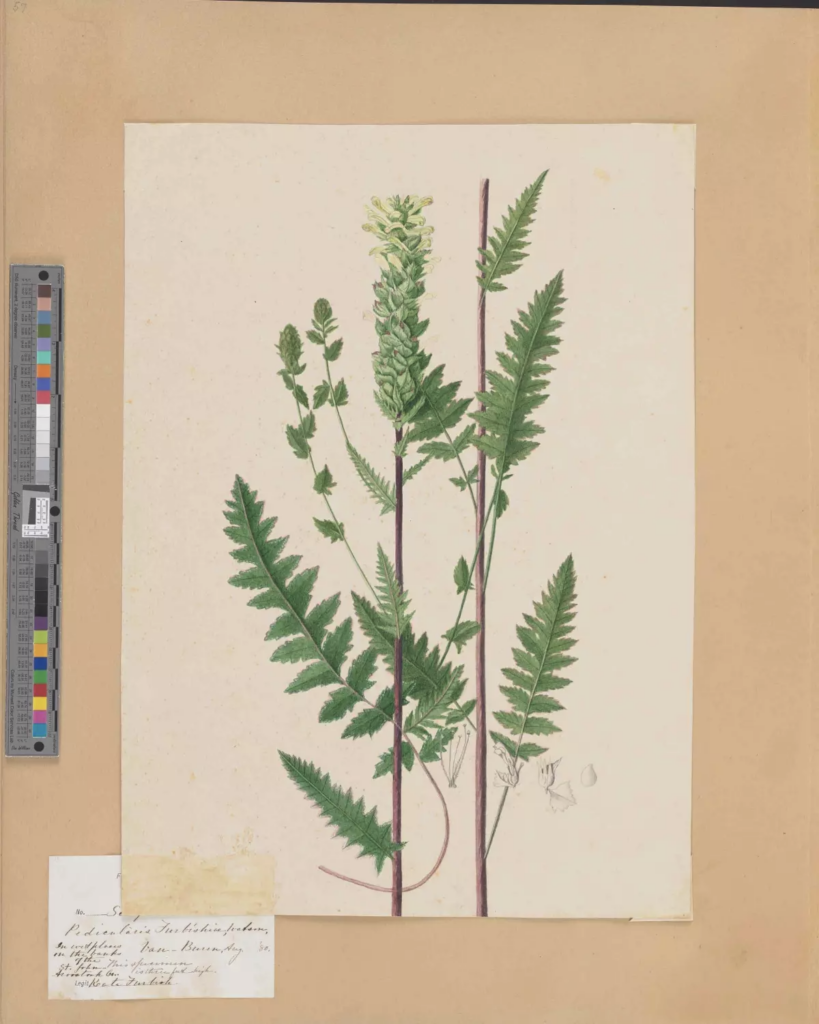
    USFWS – Pedicularis furbishae growing naturally along St. John River & Kate Furbish’s watercolor painting of the species.

  • Better Know an Art Project: Almanac

    Carly Glovinski

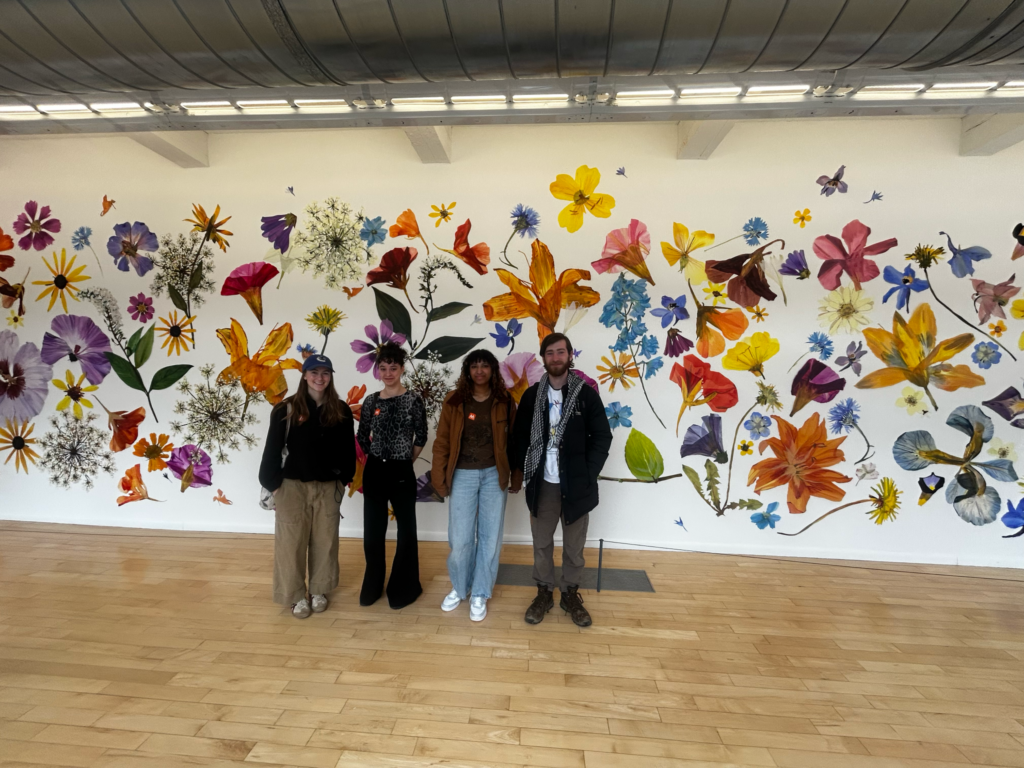
    (Our group at the exhibition)

    For our Better Know an Art Project presentation assignment, my group was assigned Carly Glovinski’s “Almanac” exhibition which is currently on display at Mass MoCa in North Adams, 

    MA. Because the exhibition was so close to Bennington College, and Mass MoCa offers free admission to students, my group had the unique opportunity to visit the exhibition in person. So, on one cloudy Sunday, my group and I piled into one of our cars and drove to North Adams to view the exhibition. 

    Glovinski is a Maine based artist from New Hampshire who graduated from Boston University’s BFA program, and is currently affiliated with the Morgan Lehman Gallery in New York City. She 

    Has had solo exhibitions and galleries across New England. She cites nature as a primary inspiration in creating her artworks, which span multiple mediums such as textiles, glasswork, and murals. Her latest work, Almanac, is no different. Inspired by the Flora of New England, Almanac focuses on the ephemerality and beauty of seasonal blooms found across New England, with literary influence on the project coming from May Sarton’s 1977 novel, House By the Sea, as well as Emily Dickinson’s love for plants conveyed within her writing, and the tradition of the Almanac, a publication which predicts seasonal and environmental patterns, and subsequently advises farmers on how to plan and grow their crops.

    The process of creating this exhibition was a clear labor of love on Glovinski’s behalf. In order to most accurately convey the heart of her project; the almanac and ephemerality of nature, Glovinski took deliberate and painstaking care in the creation of Almanac. She collected her specimens from her own garden as well as from her friends, and seasonally harvested the flowers she wished to feature in the exhibition within their species bloom times, providing capsules of time to be preserved and later translated to her art. Glovinski then pressed each of the

    flowers, and used the pressings of each flower as direct references in her painting process, using acrylic paint to illustrate on both sides of transparent mylar sheets. Often, multiple specimens of the same species are featured on the wall, showing how certain species appear throughout their bloom time and specimen nuance within a species, a clear indication of Glovinski’s dedication to accurately representing her subject matter. The flower paintings were then arranged within their bloom ranges, and scattered across the wall of the exhibit in an attempt to evoke a notion of the flowers being scattered by the wind. The exhibition features flowers over a timeline of early April-mid September, accompanied by a bloom chart to further help viewers understand deliberate placing of each painting. 

    When my group and I visited the exhibition, we found ourselves in awe at the sheer amount of detail visible in each painting; when laid across a blank wall, the paintings truly looked exactly the same as a flower pressing one might find in an herbarium, it was difficult to wrap my head around the fact that these had been painted by hand by someone, and not made by photocopying or any other

    form of mechanical reproduction. Glovinski’s Almanac is a beautiful example of how art and science can intersect, and how the accessibility of art can lead the average person to have a better understanding and appreciation of science and nature as a whole. Works of art like Almanac allow the gap in the understanding of science to be filled in by artistic expression, and the freedom to interpret nature however one may perceive it, like how Glovinski did in this exhibition. 

  • James Walsh Visits Bennington College — Herbaria and Art Books 

    Nora Beer

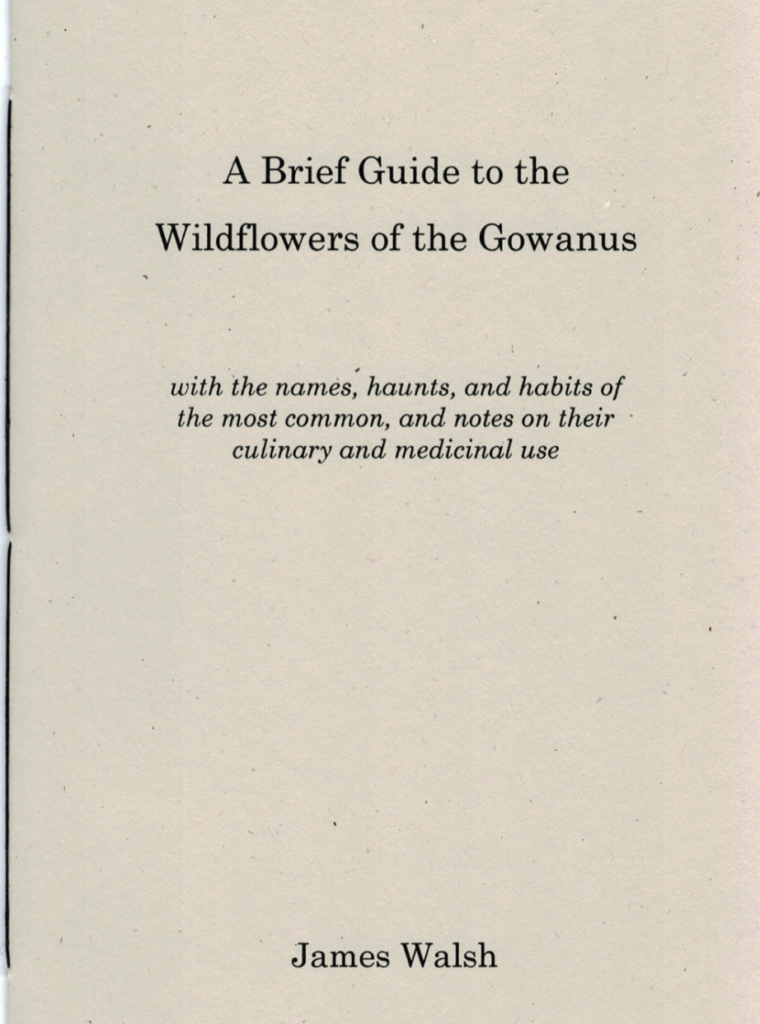
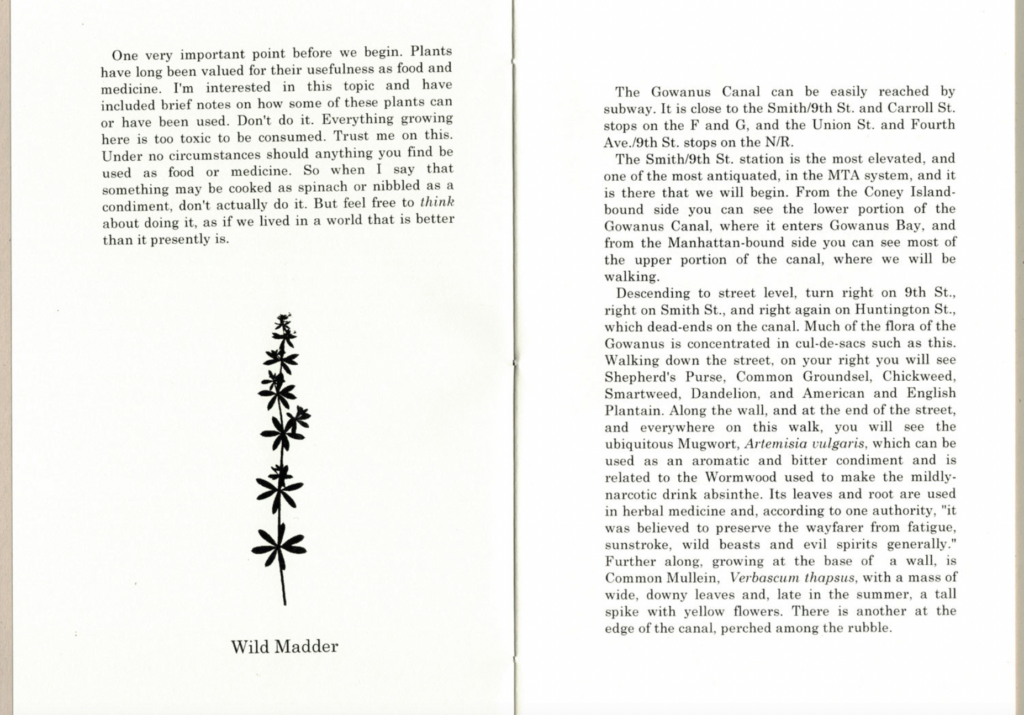
    James Walsh visited our undergraduate course on Herbarium: Research, Art, and Botany, bringing perspective on Herbaria and its artistic intersections. His visit expanded my understanding of botany as a tool in art as much as it is in science. As a fellow Brooklynite, I was extremely drawn to Walsh’s site choice of one of his works “A brief Guide to The Wildflowers Of The Gowanus” as the canal’s unkept-ness was very troubling to me as a kid. I’d heard about three eyed fish in the canal, and waste dumpsage, which made a field guide to the site something quite foreign but intriguing. Insisting the importance of the plants in an area that has generated so much community disgust as this retail eyesore, forces readers of Walsh’s work to engage with the landscape completely differently, understanding that there is life, life that has purpose in culinary spaces, in medicine, and has a story worth sharing. 

    https://www.jameswalshartist.com/books/view/4646952/3/4856144/4856152

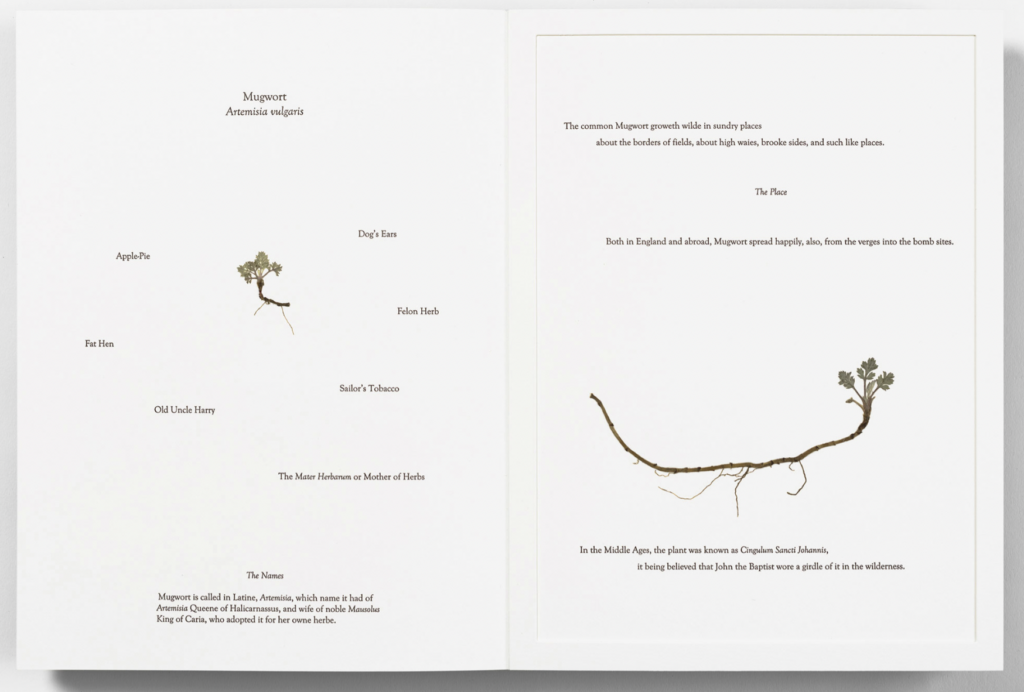
    In Walsh’s practice he enjoys playing around with how plants and texts are situated on a page, and how the two can enhance one another’s meaning. His newest work, “The Arctic Plants of New York City” plants and texts interact on a page almost akin to prose and illustration. The plant on each page acts as part of the poetic construction of each specimen presented and explained. The plants themselves are platformed quite differently than plants perform on a traditional herbarium specimen. Many pages highlight the plant and its various names with the plant situated in the middle. With this orientation, there seemed to be a decolonial spirit in attempting to present the plant at the center of its history of varying names and usages over time.  

    https://www.jameswalshartist.com/books/view/4646952/3/4801959

    In Walsh’s work there is a commitment to history, intentionality, and craft. His art books act as a brilliant alternative archive to an herbaria, one that includes historical investigation, personal inquiry, and environmental connection. By pushing the boundaries of the herbaria specimen format, Jame Walsh achieves a new status as a dynamic botanist who seeks to redefine the herbarium as an archive, extending herbal collections to book, video, sculpture, and gallery formats.

  • Welcome to the Bennington College Herbarium Blog!

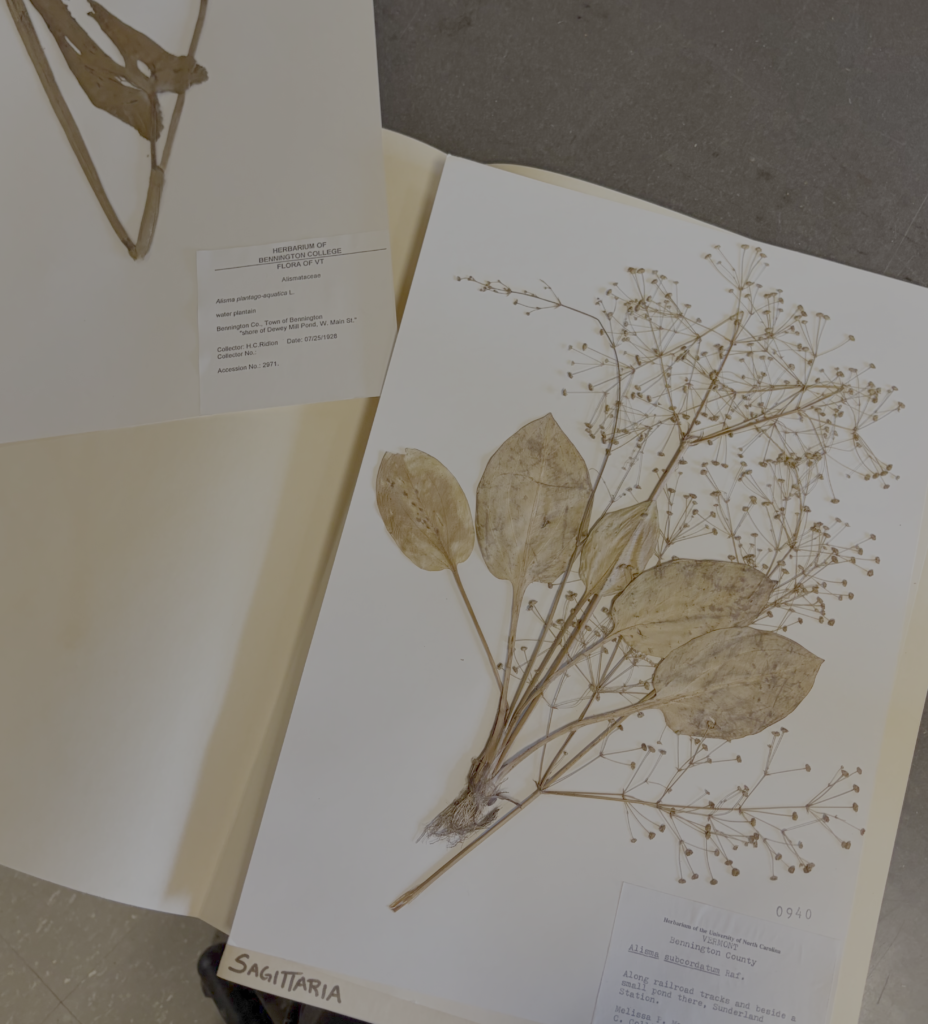
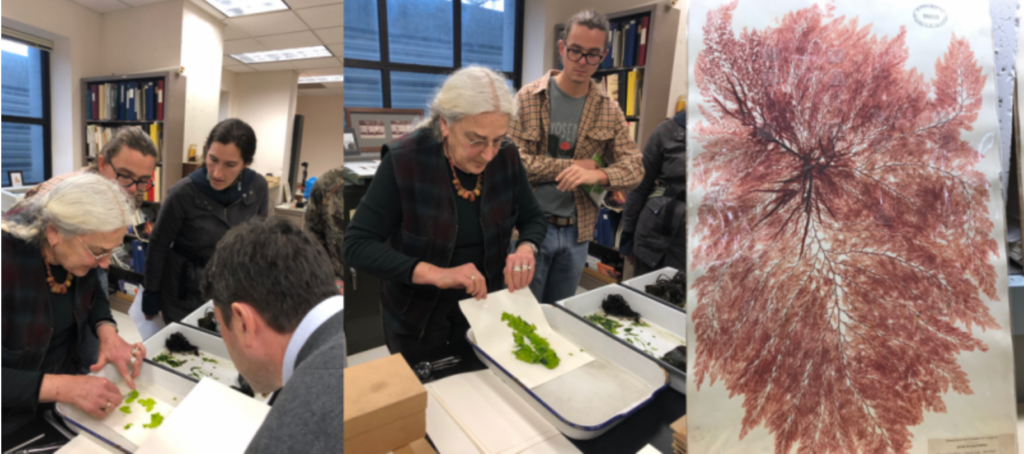
    Follow the students of BIO4441 – The Herbarium: Research, Art, and Botany, as we digitize our herbarium collection here at Bennington College and learn about the interdisciplinary practices necessary and learned from an herbaria-based education.

  • Sir Hans Sloane

    by Leni Burton

    Sir Hans Sloane, born in 1660, was a physician, naturalist, and famed collector of specimens. In his 20s, Sloane traveled to Jamaica, where he caught a major case of the “collector’s bug.” During this voyage, Sloane gathered hundreds of plant specimens, many of which were previously undocumented in European science. Many of the specimens were gathered by enslaved Africans and Indigenous people, but their contributions were seldom credited in the records, classic! Sloane purchased, traded, and received plant samples from all over the globe, as far as Asia and the Americas, turning his herbarium into a global archive. Sloane’s herbarium is one of the most remarkable and impressive collections of specimens in history, providing modern students of botany with an incredible window into early global exploration and science.


    As he traveled across Jamaica, Sloane gathered plant and animal specimens from a wide range of environments. Being a physician, he selected specimens with their economic and medicinal value in mind, often prioritizing species used locally for healing or consumption. He recorded details about local names, preparation methods, and effects, mostly using the knowledge from enslaved Africans and indigenous Caribbean people. Sloane’s marriage to Elizabeth Langley Rose, a wealthy widow whose family owned sugar plantations in Jamaica, also contributed greatly to his collection endeavors. His wife’s wealth, built on the labor of enslaved people, funded his collecting on a larger scale than would have been possible otherwise. 

    When Sloane died in 1753, he bequeathed his vast collection of books, specimens, and herbaria to the British Parliament under the condition that it be accessible to the British public as a trove of knowledge. Parliament honored his request, and Sloane’s collection became the foundation for the British Museum, creating one of the world’s first institutions dedicated to knowledge. Even though it is not presently being added to, Sloane’s herbarium is carefully maintained and remains a hub for scholars and botanists across Europe.

    Sources: 

    https://en.wikipedia.org/wiki/Hans_Sloane

  • William Louis and Chicita F. Culberson Lichen Herbarium

    by River Beslow

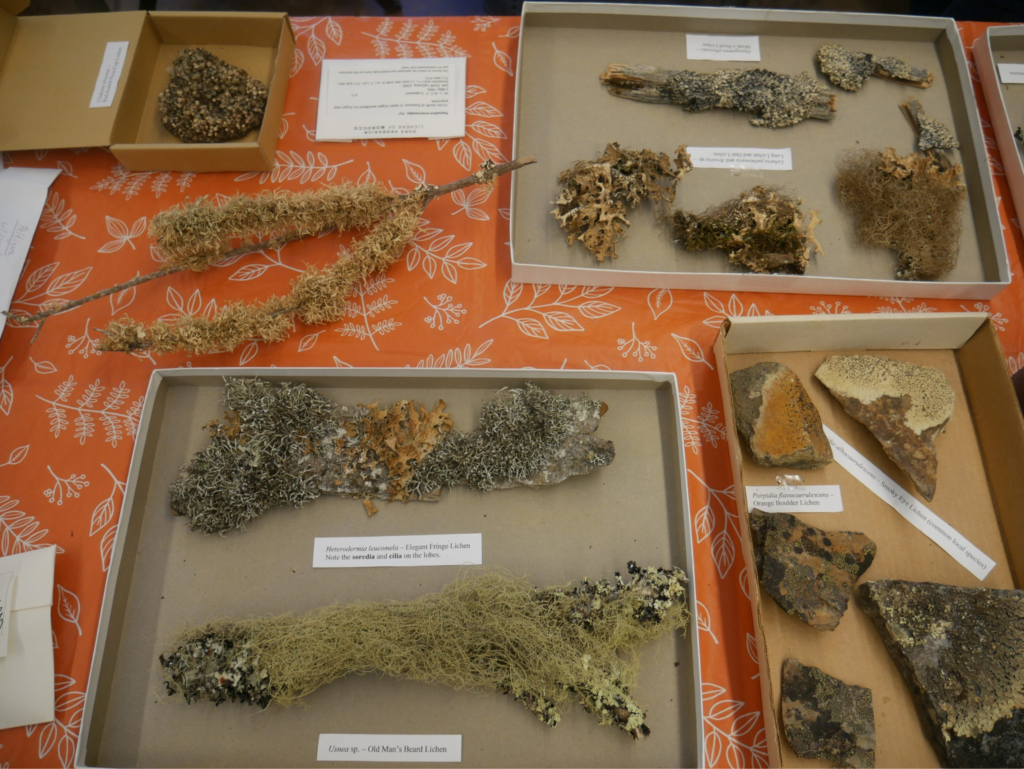
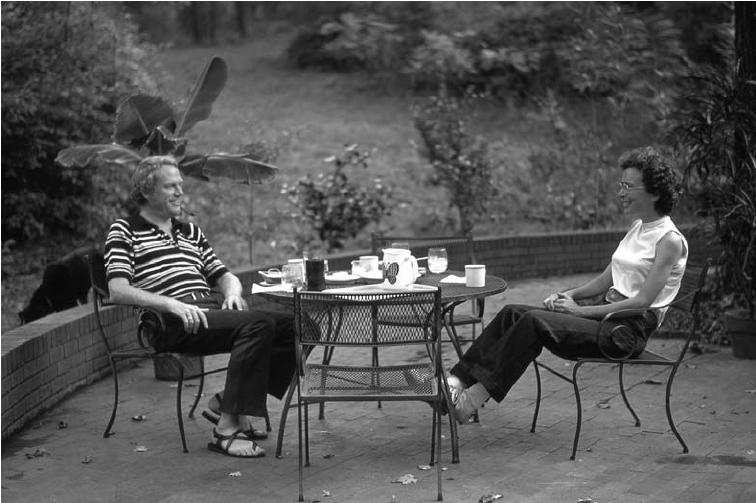
    The history of Duke University’s lichen herbarium goes all the way back to 1955, when Chicita F. Culberson and her husband, William Louis, moved to the University. When they arrived, William took a job in the botany department, and Chicita studied in the chemistry department. While Chicita was going through her chemistry PhD program, she also worked in the herbarium and studied lichen metabolites: secondary chemical compounds produced by lichens. These compounds allow scientists to distinguish between different lichen species, and it was Chicita herself who standardized a vital method of studying them.

    Thin-layer chromatography is a process pioneered by Chicita that is used to separate lichen metabolites into individual chemical compounds. Before Chicita’s research in this field, methods of distinguishing lichen metabolites were time consuming and unregulated. Thanks to Chicita, today’s scientists have a much more reliable system for researching lichens. After she received her PhD in 1959, Chicita took the role of Research Associate, and later became a Senior Research Associate. She also taught Botany at the University and continued her lichen research and contributions to the herbarium until her retirement in 2019. 

    The lichen herbarium was formally named after William Louis and Chicita Culberson  in 2010, recognizing their invaluable contributions to the department. There are now 107,000 specimens in the lichen herbarium, with over 90,000 of them being accessible online. The Duke University Herbarium community has been in mourning since the announcement of its closing, but the research completed by William and Chicita will live on. 

    Sources

    Esslinger, T.L. “Chicita F. Culberson”, International Association of Lichenology, https://ial-lichenology.org/awards/acharius_culbersoncf/. 

    Howland, Jeremy and Briscoe, Laura. “Chicita Culberson”, New York Botanical Garden, https://sweetgum.nybg.org/science/the-hand-lens/explore/narratives-details/?irn=7702.

    Photos: 

    Claveria, Angela. “Protecting Rare Lichens in Mount Mitchell State Park: The Legacy of W.L. Culberson”, Sarah P. Duke Gardens, https://gardens.duke.edu/garden-talk/protecting-rare-lichens-in-mount-mitchell-state-park-the-legacy-of-w-l-culberson/. 

    Kärnefelt, I. “Chicita Culberson”, New York Botanical Garden, https://sweetgum.nybg.org/science/the-hand-lens/explore/narratives-details/?irn=7702.

  • Anna Atkins’ Cyanotypes: Photography, Research, and Art 

    by Devon Giardini

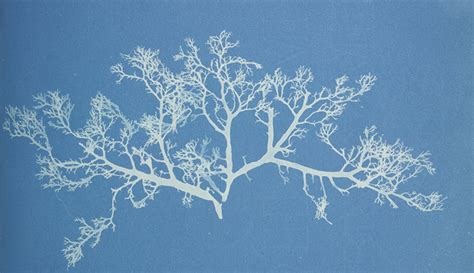
    Image citation: Anna Atkins, botanist and photographer | creator of the world’s…

    Early Life, Upbringing, & Illustration:

    Born in Kent, England in 1799, Anna Atkins (formerly Anna Children) was an only child raised by a single dad. Having lost her mother early in life, young Anna developed a close bond with her father–John George Children–who was a well-respected scientist employed by the British Museum. Growing up immersed in the world of science, Anna’s interest in biology was stoked and encouraged throughout her childhood. Though women were prevented from professionally pursuing scientific interests, Anna–like many nineteenth century female scientists–found her way into the world of biology through illustration. 

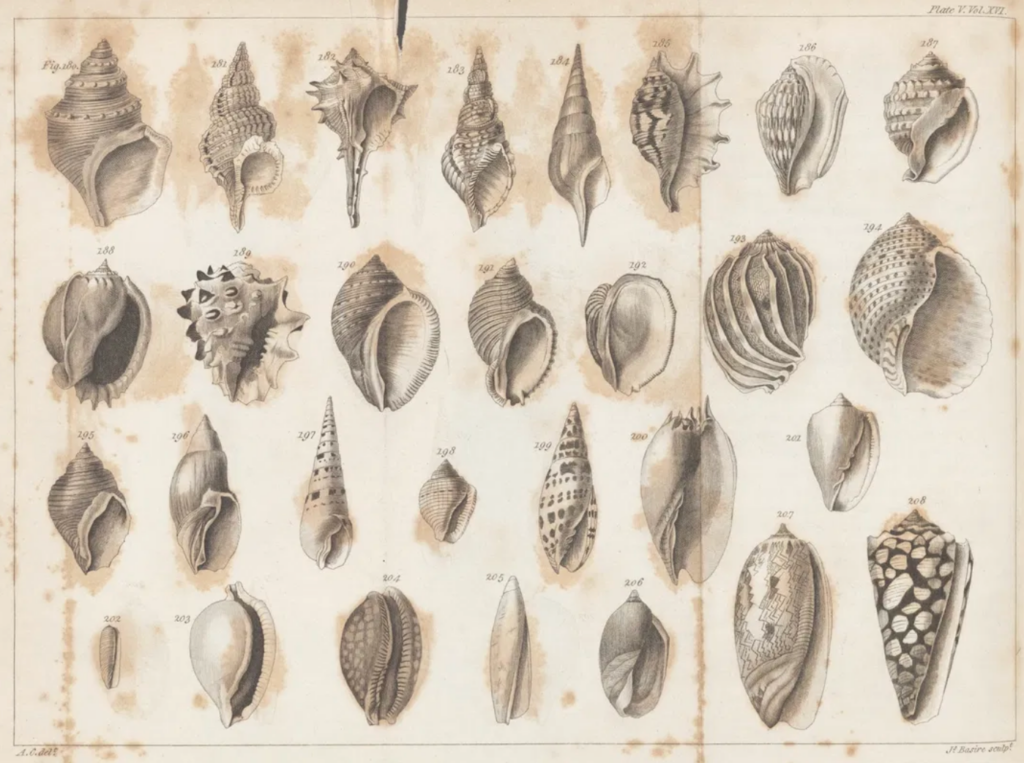
    Atkins’ became an accomplished scientific illustrator early in her life. Working alongside her father to publish an English translation of Jean Baptiste de Lamarck’s Genera of Shells, Atkins had completed 256 scientifically accurate shell drawings by her early twenties. Atkins spent her life living and working in southeast England and married her husband–John Pelly Atkins, a merchant and landowner who shared her interest in science–when she was 26 years old. Although Atkins’ work as an artist and scientist began with invertebrates, by the time she was thirty Atkins began to collect, illustrate, and document botanical specimens.

    Image citation: ‘Shells’ by Anna Atkins from Genera of Shells (1823)

    Cyanotypes and the World’s First Photobook:

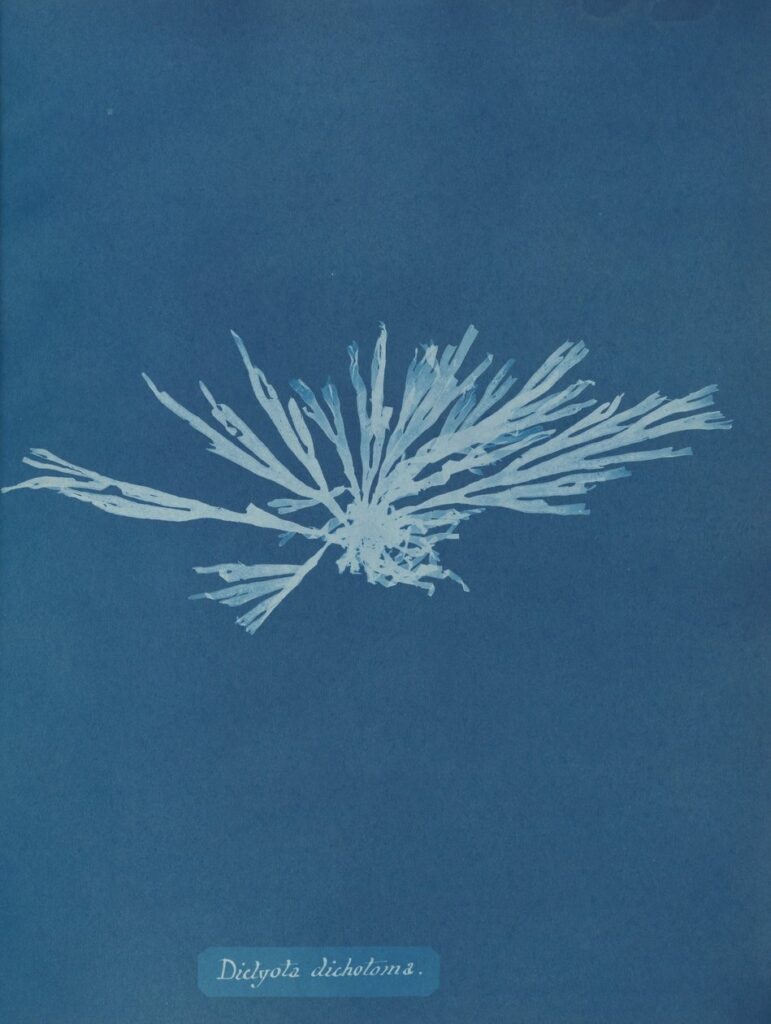
    Atkins’ interest in botany was intense and lifelong. Although prevented from pursuing a scientific career, Atkins’ involvement with the Royal Society–a connection built in association with her father–was steadfast. Atkins’ connections within the scientific community and her rapport with other scientists served her well throughout her career. In fact, her correspondence with William Henry Fox Talbot–the inventor of the “talbotype”–and friendship with Sir John Herschel, led her to experiment with photographic processes earlier than many. With the first publication of her most renowned work, “Photographs of British Algae: Cyanotype Impressions” in 1843, Atkins became the first person to publish a book illustrated entirely with photographic images.

    A culmination of Atkins’ decades-long study of British seaweed, each copy of “Photographs of British Algae: Cyanotype Impressions” contained hundreds of prints. To create the 14 substantially complete original copies we know of today, Atkins’ must have created approximately six thousand prints, each one by hand. The original copies of her book are now housed at institutions like the Linnaean Society and the Metropolitan Museum of Art. Capturing detailed and accurate impressions of the aquatic life she studied, Atkins’ books demonstrated the powerful potential of scientific photography.

    Image citation: Anna Atkins’s cyanotypes: the first book of photographs | NHM

    Reception & Modern Connections:

    Despite the revolutionary nature of Atkins’ work, the implications of her work were largely overlooked during her time. By the late 19th century, just a couple decades after her death in 1871, her work had been largely forgotten by the scientific community. In fact, before later research conducted by Larry Schaaf in the 1970s brought Atkins’ work back to the surface, William Talbot’s publication, “The Pencil of Nature,” was considered the first photographic book. Modern inquiry into the history of photography has helped bring Atkins’ work the renown it deserves. Centuries after their creation, Atkins’ cyanotypes remain beautiful, accurate, and detailed contributions to both botany and art.

    Herbaria endeavor to document and preserve botanical information, and–as discussed by Maura C. Flannery in her book “In the Herbarium”–this archival work has historically existed between the worlds of art, science, and innovation. Though modern herbarium collections focus on preserving physical plant matter, they still contain illustrations and photographs used for identification. Technology has been shaping herbaria for centuries and is still changing the way we document plants and conduct research. Photography has come a long way since Atkins’ time and modern artists like William Arnold are using this technology to document plants in new ways. In their shared endeavor to accurately document and describe plant life, Anna Atkins’ cyanotypes and herbarium specimens pursue a common goal. Though each approaches botanical documentation differently, both methods contribute unique and important aspects to the preservation process.

    Image citation: Meisterdrucke

    Links & Citations:

  • The Frances Penniman Collection – Pringle Herbarium

    by Hazel Ragozzine

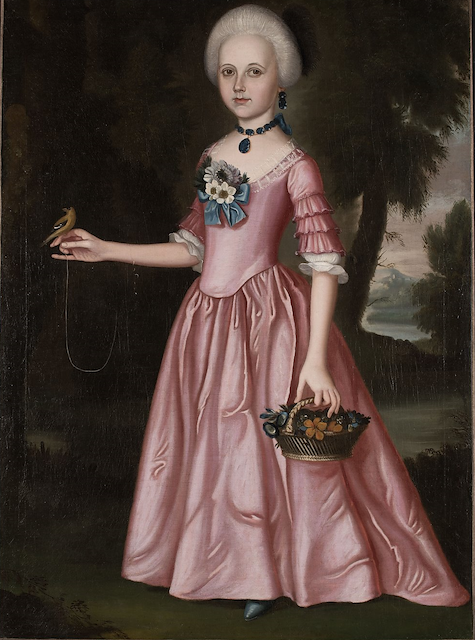
    Frances “Fanny” Montressor Brush Buchanan Allen Penniman was a great woman living in the revolutionary times and is considered to be Vermont’s first known botanist. What makes her truly unique, beyond her five last names, is that she didn’t begin to collect specimens until rather late in her life despite being well trained in botany and gardening due to her affluent upbringing. 

    She began collecting in 1814 with her daughter, Adelia and together they collected around 200 specimens which are widely considered to be the best specimens of early American history Vermont that we have. Her specimens weren’t always collected to the scientific degree required for botanists today but they were always special, many hosting poems written by her presumably in the field. One such poem was found on a specimen of Tradescantia Virginiana Spiderwort and it read as follows: “The Pledge of Friendship // Tis all my heart can give // Wouldst thou then counsel me to fall in love.”


    These artistic additions are what makes Fanny’s collection such an inspiration for The Herbarium: Art, Research, and Botany class here at Bennington. We are tying together both the creative and academic sides of herbaria, a connection that is often disregarded in modern times due to the lack of need for artistic representation of herbaria specimens thanks to photography. By looking back at Fanny’s work we can continue to learn and inspire our education and careers today.

    Sources

    Frances ‘Fanny’ Montresor Buchanan Allen Penniman…” Findagrave.com, 2024, www.findagrave.com/memorial/19910256/frances-buchanan_allen_penniman. 

    “Notable Collections | the University of Vermont.” Uvm.edu, 2018, www.uvm.edu/ccp/naturalhistory/notable-collections.“Who Was Fanny Allen? – Ethan Allen Homestead Museum – Burlington, VT.” Ethan Allen Homestead Museum, 19 Feb. 2026, ethanallenhomestead.org/who-was-fanny-allen/.

  • Overview of the Karuk Herbaria

    by Percy Lettvin

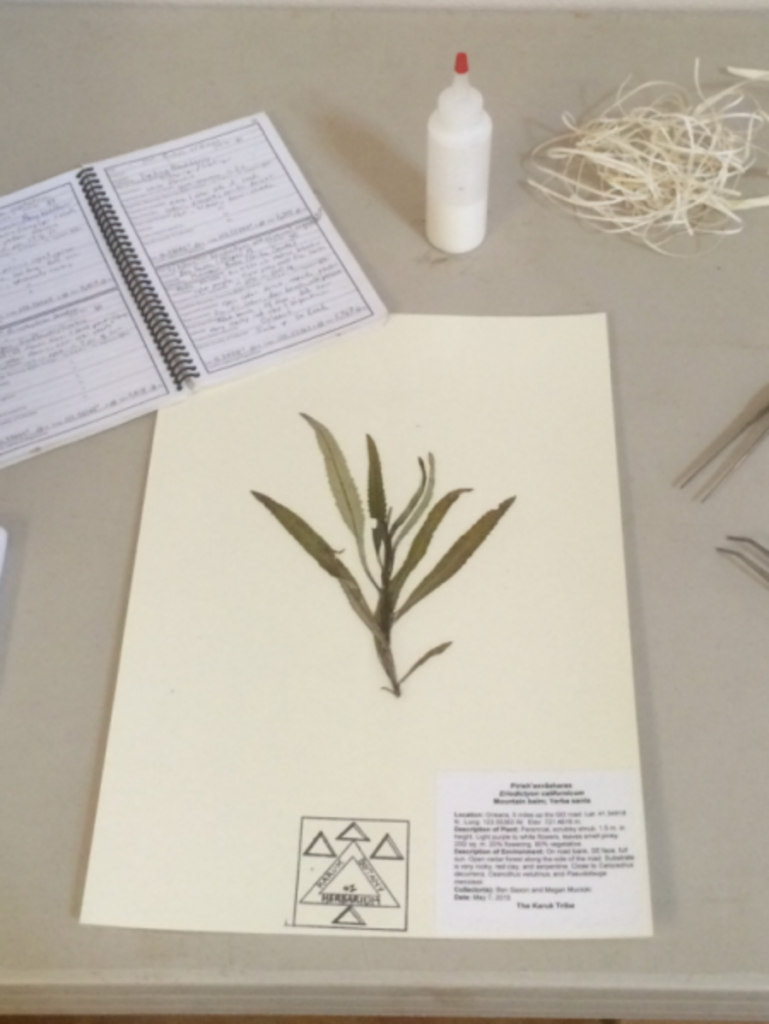
    The Karuk Tribe is one of California’s largest Native American tribes. Their ancestral lands run along the Klamath River in Northwest California. The Tribe leads an herbaria located in the Karuk People’s Center in Happy Camp, CA, as well as an herbaria in Orleans, CA. These herbaria focus on ethnobotany in the Karuk tribe’s ancestral lands: plants that are culturally used for food, fiber and medicine in the Klamath River Basin. One example of these plants is Woodwardia, a genus of fern, which the Karuk Tribe uses for basketry. Mounted specimens collected for this herbarium are labeled with Karuk plant names rather than binomial names.

    The herbarium educates academics and preserves tribal knowledge through hosting workshops at UC Berkeley. These workshops add to the current collection, which currently houses over one hundred specimens. Additionally, the Tribe runs a digital collection called Sípnuuk, which can be accessed online. Currently, the specimens are unavailable, but the website includes information regarding “Native foods and fibers, cultural practices related to the management of natural resources, the traditional knowledge and skills of Native people, Karuk language and culture.” It is possible that this archive will include herbarium specimens in the future. 

    The Karuk Herbarium is one of three tribal herbariums in North America. The Yurok Herbaria were founded at the same time as the Karuk Herbaria: in 2016 as part of a collaborative Tribal Food Security Project between the tribes in the Klamath River Basin and researchers at UC Berkeley. The Navajo Nation Herbarium is located at Northern Arizona University. 

    Sources:

    Creating herbaria with tribes in the Klamath River Basin | Society of Ethnobiology

    Karuk Tribe

    About | Sípnuuk